Everything You Need to Know About Online Casino Fairness

Want expert predictions delivered daily?
Get free tips on Telegram or upgrade to Premium.
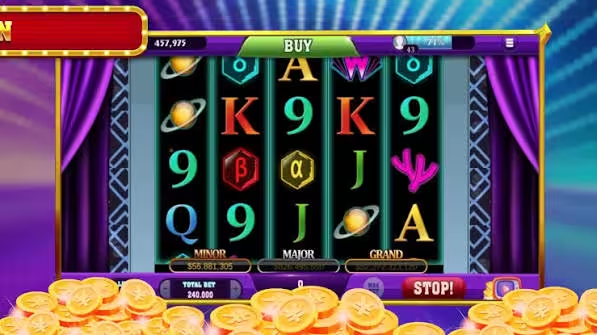
Online casino fairness means that the games you play are not rigged and that you have a real chance to win, just like in a physical casino. It's about ensuring that the outcomes of games like slots, blackjack, and roulette are truly random and that the casino pays out winnings as promised.
Understanding fairness is super important because it builds trust and makes sure your gaming experience is fun and honest. In this article, we'll explain how online casinos ensure fair play, what to look for, and how you can feel confident that your money and your chances are safe.
What Makes an Online Casino Fair?
Fairness in an online casino comes down to several key things that make sure games are honest and outcomes are not controlled by the casino. It’s about creating a level playing field where every player has an equal and random chance to win or lose.
Licensing and Regulation
The very first sign of a fair online casino is its license from a reputable regulatory body. These licenses mean the casino follows strict rules and is regularly checked to ensure it operates honestly. Without a proper license, there's no guarantee of fair play.
Random Number Generators (RNGs)
At the heart of every fair online casino game, except live dealer games, is a Random Number Generator, or RNG. This special computer program makes sure that every spin of a slot machine or deal of a card is completely random and cannot be predicted. We'll look at RNGs in more detail soon.
Return to Player (RTP) Percentages
RTP is a percentage that tells you how much of the money wagered on a game is paid back to players over a long period. A high RTP means the game is designed to pay back more, making it a fairer choice for players. This percentage is usually checked by independent auditors.
Independent Audits and Certifications
Fair online casinos don't just say they are fair; they prove it by having their games and systems checked by outside experts. These independent auditing companies test the RNGs and confirm the RTP percentages, giving players an extra layer of trust.
How Do Regulators Ensure Fairness?
Regulators are like referees for online casinos, making sure everyone plays by the rules and that the games are honest. These official bodies set strict standards and regularly check casinos to protect players.
Here are some of the ways regulators ensure online casino fairness:
- Issuing Licenses: Only casinos that meet high standards for security, financial stability, and fair play get a license. This license is a public badge of trust.
- Setting Rules: Regulators create detailed rules for how games must operate, including requirements for RNGs and transparent RTP reporting. These rules are designed to prevent cheating.
- Regular Checks: Licensed casinos are subject to ongoing audits and checks to make sure they continue to follow all the rules. If a casino breaks the rules, it can lose its license.
- Player Protection: Many regulators also have systems in place for players to complain if they feel a casino has been unfair. They can investigate these complaints and take action.
- Promoting Responsible Gaming: Regulators often require casinos to offer tools for responsible betting, such as deposit limits and self-exclusion options, to protect players from harm.
Understanding Random Number Generators (RNGs)
Random Number Generators (RNGs) are computer programs that create long sequences of numbers that are completely random, making sure game outcomes are unpredictable. Think of them as the digital dice or card shuffler for online casino games.
Here's a simple breakdown of how RNGs work in online casino games:
- Constant Operation: RNGs are always running, generating thousands of random numbers every second, even when no one is playing.
- Triggering an Outcome: When you click 'spin' on a slot machine or 'deal' in blackjack, the game takes the very next random number generated by the RNG.
- Mapping to Game Results: This random number is then matched to a specific game outcome. For a slot, it might determine which symbols land on the reels. For blackjack, it determines the next card.
- Unpredictability: Because the numbers are truly random and generated continuously, neither the casino nor the player can predict the outcome of the next game round. This is what makes the game fair.
- Testing and Certification: Reputable online casinos have their RNGs tested and certified by independent third-party companies to prove they are genuinely random and unbiased.
What is Return to Player (RTP)?
Return to Player (RTP) is a percentage that shows you how much of the money bet on a casino game is expected to be paid back to players over a very long time. It's a key indicator of how 'generous' a game is.
For example, if a slot game has an RTP of 96%, it means that for every $100 wagered on that game, it is expected to pay back $96 to players over millions of spins. The remaining 4% is the casino's edge, also known as the house edge. It's important to remember that RTP is a theoretical average over a huge number of plays, not a guarantee for any single session. Your short-term results can vary greatly, but over time, games will trend towards their stated RTP. Knowing a game's RTP can help you choose games that offer better long-term value, as discussed in our guide to casino games with the highest RTP.
The Role of Independent Auditors
Independent auditors are like impartial judges who regularly check online casinos to make sure they are playing fair and following all the rules. They are third-party companies that have no connection to the casino itself.
These auditors perform several important tasks to ensure online casino fairness:
- RNG Testing: They rigorously test the casino's Random Number Generators to confirm that the outcomes of games are truly random and not manipulated.
- RTP Verification: Auditors calculate and verify the actual Return to Player percentages for all games, ensuring they match what the casino advertises.
- System Checks: They examine the casino's software and systems to ensure data security, player protection, and overall operational integrity.
- Certification: Once a casino passes these checks, the auditor issues a certificate or seal of approval, which the casino can display on its website.
- Transparency: These audits provide transparency, giving players confidence that the games are not rigged. Look for logos from companies like eCOGRA, iTech Labs, or GLI on a casino's website.
How to Check if an Online Casino is Fair
Checking if an online casino is fair is a smart step before you start playing, and it's easier than you might think. By looking for a few key signs, you can quickly tell if a casino is trustworthy.
Here are practical steps you can take to assess an online casino's fairness:
- Look for a Valid License: Scroll to the bottom of the casino's homepage. You should see logos from licensing authorities like the Malta Gaming Authority (MGA), UK Gambling Commission (UKGC), or others. Click on the logo to verify the license if possible.
- Check for Independent Audit Seals: Search for seals from auditing bodies such as eCOGRA, iTech Labs, or Gaming Laboratories International (GLI). These indicate that the games and RNGs are regularly tested for fairness.
- Review RTP Information: Fair casinos usually publish the RTP percentages for their games. Sometimes this is in the game's information section, or there might be a dedicated page on the casino site.
- Read Player Reviews: Look for reviews from other players on independent forums and review sites. While individual experiences vary, a pattern of complaints about unfair practices is a red flag.
- Examine Terms and Conditions: Read the casino's terms and conditions, especially regarding withdrawals and bonus rules. Unfair or unclear terms can be a sign of a less reputable site.
- Test Customer Support: Contact customer support with a question about fairness or game rules. A helpful and transparent response can indicate a trustworthy operation.
- Check for Responsible Gaming Tools: Reputable casinos offer tools like deposit limits, loss limits, and self-exclusion options. This shows they care about player well-being, which often goes hand-in-hand with fairness. For more tips on choosing a good casino, you might find our guide on how to choose the best online casino games helpful.
To help you quickly identify a fair online casino, here's a summary of key indicators to look for:
| Feature | What to Look For | Why It Matters for Fairness |
|---|---|---|
| Licensing | Visible license from a reputable authority (e.g., MGA, UKGC). | Ensures the casino operates under strict rules and is regularly monitored. |
| Auditing | Seals from independent auditors (e.g., eCOGRA, iTech Labs, GLI). | Confirms games and RNGs are tested for true randomness and correct RTP. |
| RTP Information | Clear display of Return to Player percentages for games. | Shows transparency and helps players choose games with better theoretical payouts. |
| Secure Technology | SSL encryption (padlock icon in browser) and strong data protection policies. | Protects your personal and financial information from unauthorized access. |
| Customer Support | Responsive, knowledgeable, and helpful support team. | Indicates a casino that values its players and is willing to address concerns fairly. |
| Responsible Gaming Tools | Options for deposit limits, loss limits, self-exclusion. | Demonstrates a commitment to player well-being, often a sign of overall integrity. |
Common Misconceptions About Online Casino Fairness
Many players have questions or worries about online casino fairness, and sometimes these come from misunderstandings about how games work. It's good to clear up these common myths.
Here are some frequent misconceptions and the truth behind them:
- Myth: Online slots get 'hot' or 'cold' and are due for a win or a loss.
- Truth: Every spin on a slot machine is an independent event, thanks to the RNG. Past results do not affect future outcomes. There's no such thing as a slot being 'due.'
- Myth: The casino can change a game's RTP to make you lose more.
- Truth: For licensed casinos, game RTPs are set by the game developer and verified by auditors. They cannot be changed on the fly by the casino without re-certification, which would be illegal.
- Myth: Online casinos are rigged because I lost a lot of money quickly.
- Truth: Losing streaks are a normal part of gambling, just like winning streaks. The house edge means that over time, the casino will always have a slight advantage, but this doesn't mean games are rigged.
- Myth: Playing free online casino games is different from real money games in terms of fairness.
- Truth: Reputable casinos use the exact same RNGs and game logic for both free-play and real-money versions of their games. So, if you're playing free online casino games, you're experiencing the same fairness.
- Myth: Live dealer games are fairer because you can see the dealer.
- Truth: While live dealer games offer a different kind of transparency, both live and RNG-based games are fair if the casino is licensed and regulated. Live games still have rules and procedures that ensure randomness, such as proper shuffling and dealing.
Responsible Betting and Fairness
Understanding online casino fairness goes hand-in-hand with practicing responsible betting. When you know a casino is fair, you can focus on managing your play wisely and enjoying the entertainment.
Fairness ensures that the outcomes are random, but it doesn't guarantee you'll win. That's why responsible betting is so important. It means setting limits on how much time and money you spend, never chasing losses, and knowing when to stop. A fair casino will provide tools to help you with this, like deposit limits or self-exclusion options. If you're playing at a fair site, you can trust the games, but you still need to trust yourself to play within your means. Learning about responsible bankroll management can help you manage your funds effectively while enjoying fair games.
Conclusion
Online casino fairness is the bedrock of a trustworthy and enjoyable gaming experience, ensuring that every game you play has a truly random outcome. By understanding licensing, Random Number Generators (RNGs), Return to Player (RTP), and independent audits, you can confidently choose reputable platforms. Always remember to prioritize responsible betting practices alongside seeking out fair casinos.
? Frequently Asked Questions
How can I be sure an online casino's games aren't rigged? ⌄
What is an RNG, and why is it important for fairness? ⌄
Does RTP guarantee I will win a certain amount? ⌄
Are live dealer casino games fairer than regular online casino games? ⌄
What should I do if I suspect an online casino is unfair? ⌄
Can free casino games help me check for fairness? ⌄
Related Articles
- Martingale Strategy: Myth or Winning System?
- Online Casino Facts Every Player Should Know
- The Truth About Lucky Streaks in Online Casinos
- Do VIP Players Have Better Odds at Online Casinos?
- Are Online Casino Reviews Always Trustworthy?
- The Truth About Winning at Online Casinos
- How to Identify Safe and Trusted Online Casinos
📬 Free Daily Predictions
Get expert picks delivered to your inbox every morning.