Draw No Bet Odds Explained
Want expert predictions delivered daily?
Get free tips on Telegram or upgrade to Premium.
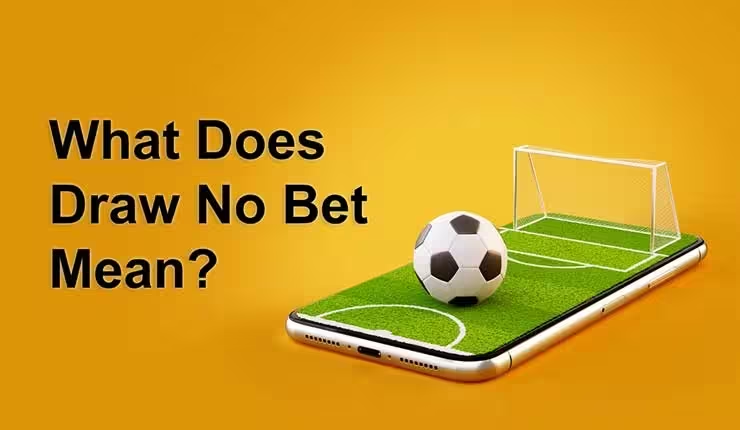
Draw No Bet (DNB) is a popular sports betting market that removes the draw outcome from a match, offering a refund if the game ends in a tie. This market provides a safer way to bet on sports, especially when you are confident one team will win but want protection against a draw.
Understanding Draw No Bet odds can significantly enhance your betting strategy by reducing risk and offering a safety net in uncertain matches. This article will explain exactly how DNB works, when to use it, and how it compares to other betting options, helping you make more informed decisions.
What is Draw No Bet (DNB)?
Draw No Bet, often shortened to DNB, is a betting option where your stake is returned to you if the sporting event you bet on ends in a draw. Essentially, you are betting on either Team A to win or Team B to win, and the possibility of a draw is removed from the equation for your wager.
This means if your chosen team wins, your bet pays out as usual. If your chosen team loses, your bet loses. However, if the match finishes in a tie, your original stake is given back to you, as if the bet never happened. It is a popular choice for bettors looking to minimize risk in close contests.
How Draw No Bet Odds Work
Draw No Bet odds work by adjusting the probabilities of a standard 1X2 (Match Winner) market to account for the removal of the draw outcome. Bookmakers calculate DNB odds by effectively redistributing the probability of a draw between the two remaining outcomes: a win for Team A or a win for Team B.
Because the risk of losing your stake due to a draw is eliminated, the odds for a DNB bet will always be lower than the odds for a regular outright win bet on the same team. This lower payout reflects the added safety net you receive, making it a trade-off between risk and reward.
Calculating Your Potential Payouts with DNB
Calculating your potential payouts for a Draw No Bet is straightforward once you understand the odds. You simply multiply your stake by the DNB odds offered for your chosen team, and that gives you your total return, including your original stake.
For example, if you place a £10 bet on Team A to win at DNB odds of 1.70, and Team A wins, your return would be £10 * 1.70 = £17. This includes your initial £10 stake and £7 profit. If the match is a draw, you get your £10 stake back.
When to Use Draw No Bet in Sports Betting
Draw No Bet is particularly useful in situations where you believe one team has a strong chance of winning, but you also recognize that a draw is a very real possibility. It acts as a form of insurance, protecting your stake if the game doesn't go entirely your way.
Consider using DNB when:
-
Backing an underdog: If you think an underdog could cause an upset but are worried about them only managing a draw, DNB offers protection.
-
Away teams in tough fixtures: An away team might be strong, but playing on the road against a decent opponent increases the chance of a draw. DNB mitigates this risk.
-
Matches between evenly matched teams: When two teams are very similar in strength, a draw is a common outcome. DNB allows you to pick a winner without the full risk of a tie.
-
Reducing overall risk: For bettors who prefer a more conservative approach, DNB allows for safer betting on outcomes where a draw is frequent, like in football.
Advantages of Draw No Bet
The Draw No Bet market offers several distinct advantages that make it a popular choice for many sports bettors. These benefits primarily revolve around risk management and providing a more secure betting experience.
Here are the main advantages of using DNB:
-
Reduced Risk: The most significant advantage is that you eliminate the risk of losing your stake if the match ends in a draw. This safety net can save your bankroll on many occasions.
-
Increased Confidence: Knowing you have a refund option can make you more confident in backing a team, especially in matches where a draw feels likely.
-
Simplicity: Unlike more complex markets, DNB is easy to understand. You pick a winner, and if it's a draw, you get your money back.
-
Strategic Flexibility: It allows you to back teams you might otherwise avoid due to the high probability of a draw, opening up more betting opportunities.
Disadvantages of Draw No Bet
While Draw No Bet offers clear benefits in terms of risk reduction, it also comes with certain trade-offs that bettors should be aware of. Understanding these drawbacks is essential for making a balanced decision on whether to use this market.
The primary disadvantages include:
-
Lower Odds: Because of the added safety net, DNB odds are always lower than the odds for a straight win bet on the same team. This means smaller potential payouts.
-
No Profit on a Draw: While you get your stake back, you don't make any profit if the match ends in a draw. If you had bet on the draw, you would have made a profit.
-
Opportunity Cost: Sometimes, the value might be better found in other markets, especially if you are confident enough to risk the draw for higher returns.
Comparing Draw No Bet to Other Betting Markets
To fully appreciate the value of Draw No Bet, it helps to compare it with other common betting markets, particularly the standard 1X2 (Match Winner) and Asian Handicap 0.0. Each market offers a different balance of risk and reward.
The table below outlines how these markets differ in terms of outcomes and potential returns, helping you choose the best option for your strategy.
| Betting Market | Team A Wins | Team B Wins | Draw | Risk Level | Payout Potential |
|---|---|---|---|---|---|
| 1X2 (Match Winner) | Win | Lose | Lose | High | Highest |
| Draw No Bet (DNB) | Win | Lose | Stake Refund | Medium | Medium |
| Asian Handicap 0.0 | Win | Lose | Stake Refund | Medium | Medium |
As you can see, Draw No Bet and Asian Handicap 0.0 are functionally identical. Both offer a refund on your stake if the match ends in a draw, providing a middle ground between the high risk/high reward of a 1X2 bet and more complex handicap options.
Practical Examples of Draw No Bet
Let's look at a couple of practical examples to illustrate how Draw No Bet works in real-world sports betting scenarios. These examples will help solidify your understanding of potential outcomes and returns.
Consider a football match between Manchester United and Arsenal. The odds for a standard 1X2 market might be:
-
Manchester United to Win: 2.50
-
Draw: 3.40
-
Arsenal to Win: 2.80
Now, let's compare this to the Draw No Bet odds for the same match:
-
Manchester United DNB: 1.70
-
Arsenal DNB: 1.90
Example 1: Betting on Manchester United DNB
You place a £20 bet on Manchester United DNB at odds of 1.70.
-
If Manchester United wins: You get £20 * 1.70 = £34 (a £14 profit).
-
If Arsenal wins: You lose your £20 stake.
-
If the match is a draw: You get your £20 stake back.
Example 2: Betting on Arsenal DNB
You place a £20 bet on Arsenal DNB at odds of 1.90.
-
If Arsenal wins: You get £20 * 1.90 = £38 (a £18 profit).
-
If Manchester United wins: You lose your £20 stake.
-
If the match is a draw: You get your £20 stake back.
These examples clearly show the protective nature of DNB, where a draw results in a refund rather than a loss.
Responsible Betting with Draw No Bet
While Draw No Bet reduces some risk, it is important to remember that no bet is entirely risk-free. Responsible betting practices remain essential, regardless of the market you choose. Always bet within your means and never chase losses.
Consider using the 1% bankroll rule to manage your funds effectively, even when using DNB bets. This approach helps ensure that a series of losing bets does not significantly impact your overall betting budget. Betting should always be an enjoyable activity, not a financial burden.
Conclusion
Draw No Bet is a valuable market for sports bettors looking to mitigate risk, especially in matches where a draw is a strong possibility. By offering a stake refund if the game ends in a tie, DNB provides a safer alternative to outright win bets, albeit with slightly lower odds. Understanding how and when to use DNB can be a smart addition to your betting toolkit, helping you make more calculated and protected wagers.
? Frequently Asked Questions
What happens to my Draw No Bet if the match ends in a draw? ⌄
Are Draw No Bet odds always lower than regular match-winner odds? ⌄
Is Draw No Bet the same as Asian Handicap 0.0? ⌄
When is the best time to use a Draw No Bet? ⌄
Can I include Draw No Bet selections in an accumulator bet? ⌄
Related Articles
- How to view settled multi-bets on the 22Bet Kenya application
- How to turn off promotional SMS alerts from SportPesa
- how to cash out an active ticket on sportybet kenya
- How to change your registered phone number on Betika
- How to edit a bet slip after placing it on SportyBet
- How to check your Betika bet history offline via USSD
- How to Use 1xBet Bonus Wallet in Kenya
📬 Free Daily Predictions
Get expert picks delivered to your inbox every morning.