How to Identify Value Draw No Bet Odds

Want expert predictions delivered daily?
Get free tips on Telegram or upgrade to Premium.
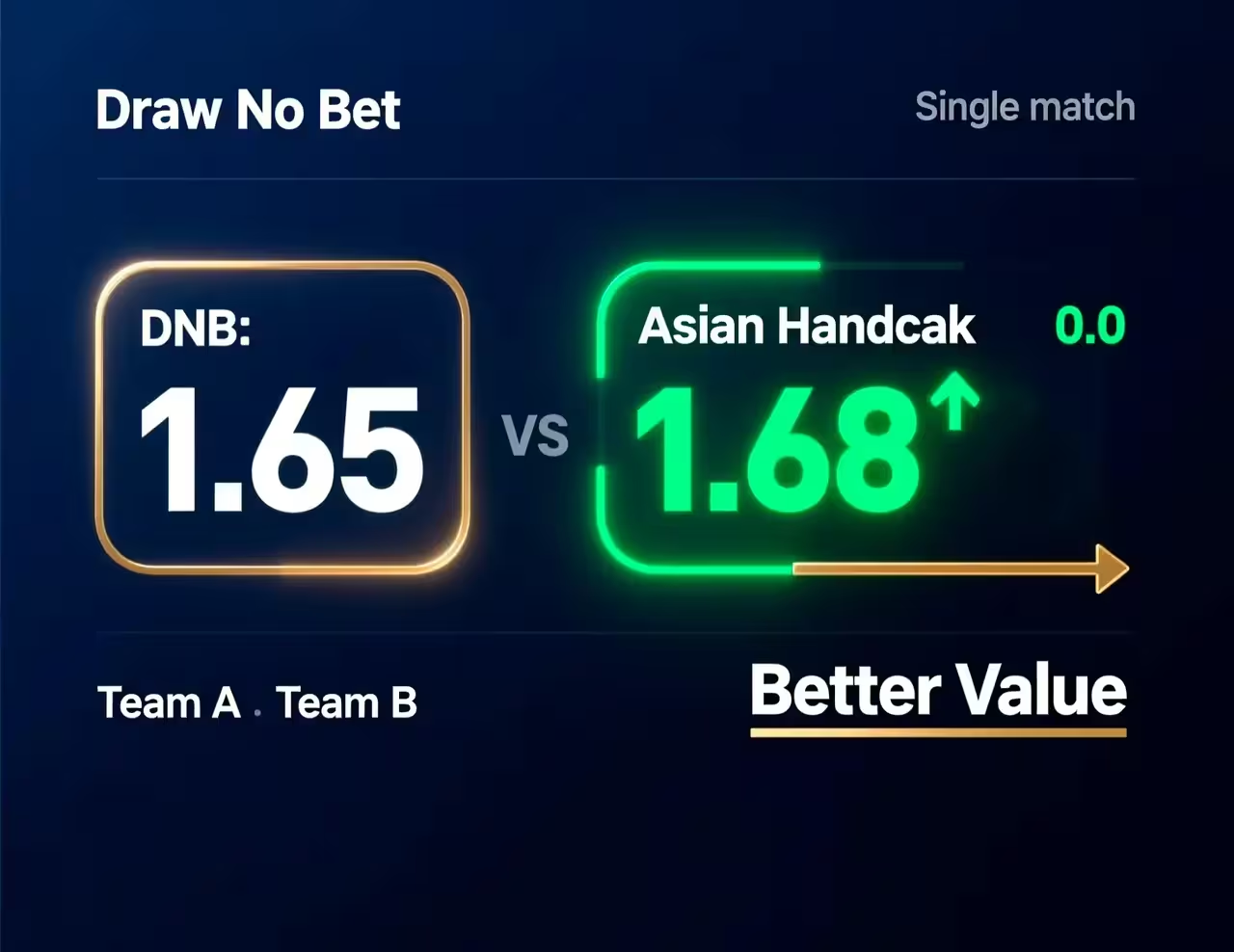
Identifying value in Draw No Bet (DNB) odds means finding situations where a bookmaker's odds are higher than the true probability of a team winning, considering the draw as a refunded stake. This involves careful analysis and comparing your own assessment of a match with the odds offered by betting sites.
Understanding how to spot value in DNB bets can significantly improve your long-term betting success by reducing risk and highlighting favorable opportunities. This guide will explain what Draw No Bet means, how to calculate implied probabilities, and provide practical steps to find value in this popular betting market.
What is Draw No Bet (DNB) and Why Use It?
Draw No Bet (DNB) is a betting market where you bet on one team to win a match. If your chosen team wins, your bet wins. However, if the match ends in a draw, your original stake is returned to you, meaning you neither win nor lose. If the other team wins, your bet loses.
This market is popular because it offers a safety net compared to a standard 1X2 (Win-Draw-Win) bet. It effectively removes the draw outcome from your consideration, making it a two-option bet: either your team wins, or your stake is returned. This reduced risk often comes with lower odds than a straight win bet, but it can be a smart strategy for certain matches.
Understanding Value in Sports Betting
Value in sports betting occurs when the odds offered by a bookmaker are higher than the true probability of an event happening. In simpler terms, you find value when you believe an outcome is more likely to happen than the bookmaker's odds suggest. This difference represents a potential edge for the bettor.
Finding value isn't about picking winners every time; it's about consistently making bets where the odds are in your favor over the long run. It requires you to form your own informed opinion on the likelihood of an outcome, independent of the bookmaker's prices. This is the core skill that separates successful bettors from those who rely purely on luck.
Calculating Implied Probability from DNB Odds
To identify value, you first need to understand what probability the bookmaker's odds imply. Implied probability is the percentage chance of an outcome occurring, according to the odds. For DNB odds, the calculation is straightforward.
You can calculate the implied probability using a simple formula:
- Implied Probability = (1 / Decimal Odds) x 100%
For example, if a team has DNB odds of 1.80, the implied probability is (1 / 1.80) x 100% = 55.56%. This means the bookmaker believes there's a 55.56% chance of that team winning (with the draw returning your stake). Your goal is to find situations where you believe the true probability is higher than this percentage.
Estimating True Probability: Your Key to Value
Estimating the true probability of a match outcome is the most challenging yet crucial step in finding value. This involves thorough research and analysis, going beyond just looking at recent results. You need to consider various factors that can influence a game.
Here are some key aspects to research:
- Team Form: Look at recent performance, not just wins and losses, but also goals scored, conceded, and overall playing style.
- Head-to-Head Records: Some teams consistently perform well or poorly against specific opponents, regardless of current form.
- Injuries and Suspensions: The absence of key players can significantly weaken a team.
- Motivation and Stakes: Is it a cup final, a relegation battle, or a dead rubber match? Motivation can heavily influence performance.
- Home Advantage: Playing at home often provides a significant boost, though its impact can vary by league and team.
- Tactics and Style: How do the teams' playing styles match up? A defensive team against an attacking one, for instance.
By carefully evaluating these factors, you can form your own informed opinion on the likelihood of each outcome, allowing you to assign your own estimated probabilities for a win, draw, or loss.
Practical Steps to Identify Value DNB Odds
Identifying value in Draw No Bet odds involves a systematic approach. By following these steps, you can increase your chances of finding profitable betting opportunities.
Step 1: Convert 1X2 Odds to DNB Odds (or Compare Directly)
While many bookmakers offer DNB odds directly, understanding how they are derived from standard 1X2 odds can give you deeper insight. Bookmakers essentially remove the draw outcome by adjusting the odds for the win outcomes.
A common way to approximate DNB odds from 1X2 odds is by using the following formula:
- DNB Odds (Team A) = (Odds Team A Win * Odds Draw) / (Odds Team A Win + Odds Draw)
However, the most direct approach for identifying value is often to compare the DNB odds offered by the bookmaker directly against your own estimated probability for a team to win (where a draw means a refund). Let's look at an example:
Here's a table illustrating how to compare bookmaker DNB odds with your estimated probabilities to spot value:
| Outcome | Bookmaker DNB Odds | Bookmaker Implied Probability (1/Odds) | Your Estimated Probability (Win Only) | Value? |
|---|---|---|---|---|
| Team A Win DNB | 1.75 | 57.14% | 65% | Yes (Your probability is higher) |
| Team B Win DNB | 2.20 | 45.45% | 40% | No (Your probability is lower) |
Step 2: Assess the Match and Determine Your Own Probabilities
This is where your research skills come into play. Based on all the factors mentioned earlier (form, injuries, motivation, head-to-head, etc.), you need to assign a percentage chance to each outcome. For DNB, you are primarily interested in the probability of your chosen team winning.
For instance, after your research, you might conclude that Team A has a 65% chance of winning, a 20% chance of drawing, and a 15% chance of losing. For a DNB bet on Team A, you are interested in that 65% win probability.
Step 3: Compare Your Probabilities to Bookmaker's Implied Probabilities
Once you have your estimated probability for a team to win and the bookmaker's implied probability from their DNB odds, you can compare them. If your estimated probability is higher than the bookmaker's implied probability, you have found a value bet.
Using the example from the table: if the bookmaker offers 1.75 for Team A DNB (implying 57.14%) and you believe Team A has a 65% chance of winning, then betting on Team A DNB offers value. This is because you are getting better odds than what you perceive as the true likelihood of the event.
Common Mistakes to Avoid When Betting DNB
Even with a clear strategy, it's easy to fall into common traps that can hinder your success. Being aware of these pitfalls can help you make more informed decisions and manage your betting responsibly.
Here are some mistakes to steer clear of:
- Insufficient Research: Relying on gut feelings or surface-level information instead of detailed analysis can lead to poor value identification.
- Ignoring the Vig (Overround): Bookmakers build a margin into their odds, meaning the implied probabilities for all outcomes will sum to over 100%. This is their profit margin, and it reduces the overall value available.
- Chasing Losses: Trying to recover previous losses by placing impulsive or higher-stake bets is a dangerous path that often leads to further losses.
- Overestimating Your Own Judgment: While developing your own probabilities is key, be realistic about your accuracy. No one is right 100% of the time.
- Betting on Low-Value Odds: Just because DNB offers a refund on a draw doesn't mean all DNB bets are good value. Always compare your estimated probability to the implied odds.
Responsible Betting with Draw No Bet
While Draw No Bet can be a less risky market, responsible betting practices are still essential. It's important to approach sports betting as a form of entertainment, not a guaranteed way to make money. Always bet within your means and set clear limits for yourself.
A crucial aspect of responsible betting is bankroll management. This involves setting aside a specific amount of money for betting and only risking a small percentage of it on any single bet. This strategy protects you from significant losses during cold streaks and ensures you can continue betting over the long term. Remember, the goal is long-term enjoyment and potential profit, not quick wins that can lead to financial strain.
Conclusion
Identifying value in Draw No Bet odds is a skill that combines thorough research with a clear understanding of probability. By estimating true match probabilities and comparing them against bookmaker implied odds, you can find opportunities where the price offered is better than the actual likelihood of the event. Always remember to bet responsibly and manage your bankroll effectively to ensure a sustainable and enjoyable betting experience.
? Frequently Asked Questions
What does 'Draw No Bet' mean in simple terms? ⌄
How is Draw No Bet different from a standard Win-Draw-Win (1X2) bet? ⌄
Why are DNB odds usually lower than regular win odds? ⌄
Can I always find value in Draw No Bet markets? ⌄
What research factors are most important for DNB value betting? ⌄
Is Draw No Bet a good market for beginners? ⌄
Related Articles
- How to view settled multi-bets on the 22Bet Kenya application
- How to turn off promotional SMS alerts from SportPesa
- how to cash out an active ticket on sportybet kenya
- How to change your registered phone number on Betika
- How to edit a bet slip after placing it on SportyBet
- How to check your Betika bet history offline via USSD
- How to Use 1xBet Bonus Wallet in Kenya
📬 Free Daily Predictions
Get expert picks delivered to your inbox every morning.